
How Physical Therapy Reduces Knee Pain in Office Workers
Take a walk through any corporate campuses like Google, Meta, Microsoft, or your own headquarters, after a long hours of meeting. You will notice people standing up to stretch a lot more than you'd expect. Employees shifting uncomfortably in their chairs. Workers who visibly frown and grab their knees when they finally stand up.
Knee discomfort in an office environment may not look serious at first, but it can affect concentration, increase fatigue, and reduce day-to-day productivity. Ongoing knee problems can also lead to more time away from work, and in more serious cases, return to work can take weeks or even months depending on treatment and job demands. Workers’ compensation costs for knee injuries can reach tens of thousands of dollars per case, especially when surgery is involved. Over time, employers may also see higher health claims, more follow-up care, and retention pressure if workers don’t feel physically supported.
Why Office Work Causes Knee Pain
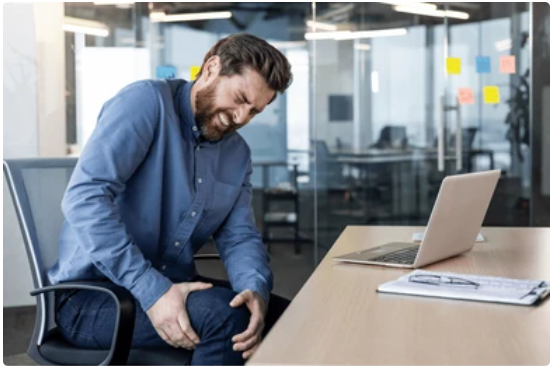
It might seem like a desk job would be easy on the joints, but sitting creates its own unique set of risks. The human knee was designed to move, not to be locked in a static position all day. Think about what is actually happening to your office workers:
Sitting with the knees bent at 90 degrees for 6 to 8 hours causes the hamstrings and calf muscles to become permanently shortened, pulling tightly on the back of the knee joint.
When you sit all day, your quadriceps (the large muscles on the front of the thigh) essentially becomes inactive. When a worker finally stands up, their primary shock absorbers are too weak to support their body weight.
Regularly crossing the legs under the desk twists the kneecap and creates a severe, uneven pulling on the muscles.
Sitting completely still for three hours and then suddenly jumping up to rush to a meeting forces cold, stiff joints to bear sudden weight, grinding the cartilage in the knee joint.
What symptoms your office workers may complain about:
Stiffness and pain when standing up from their desk
Pain around the kneecap that gets worse after long meetings
Tightness in the back of the knee or thigh after prolonged sitting
Discomfort when taking stairs that didn't used to bother them
One knee bothering them more, often from habitually crossing one leg
Knee pain that gets worse toward the end of the workday
How Physical Therapy Treats Knee Pain in Office Workers

Telling an office worker to take a walk doesn't fix a joint that is locked down by chronically tight muscles. They need targeted physical therapy to reverse the damage of the desk chair. Physical therapy helps office workers by:
Deeply stretching the chronically tight hamstrings and calf muscles that are pulling on the knee joint.
Strengthening the weak thigh and glute muscles that have turned off from constant sitting, restoring the knee's natural shock absorbers.
A physical therapist looks at the whole picture. If an employee's chair is too low, it puts the knee at a terrible angle all day. We fix the environment so the pain doesn't come back tomorrow.
How TheraMotive Brings Mobile Physical Therapy to Offices
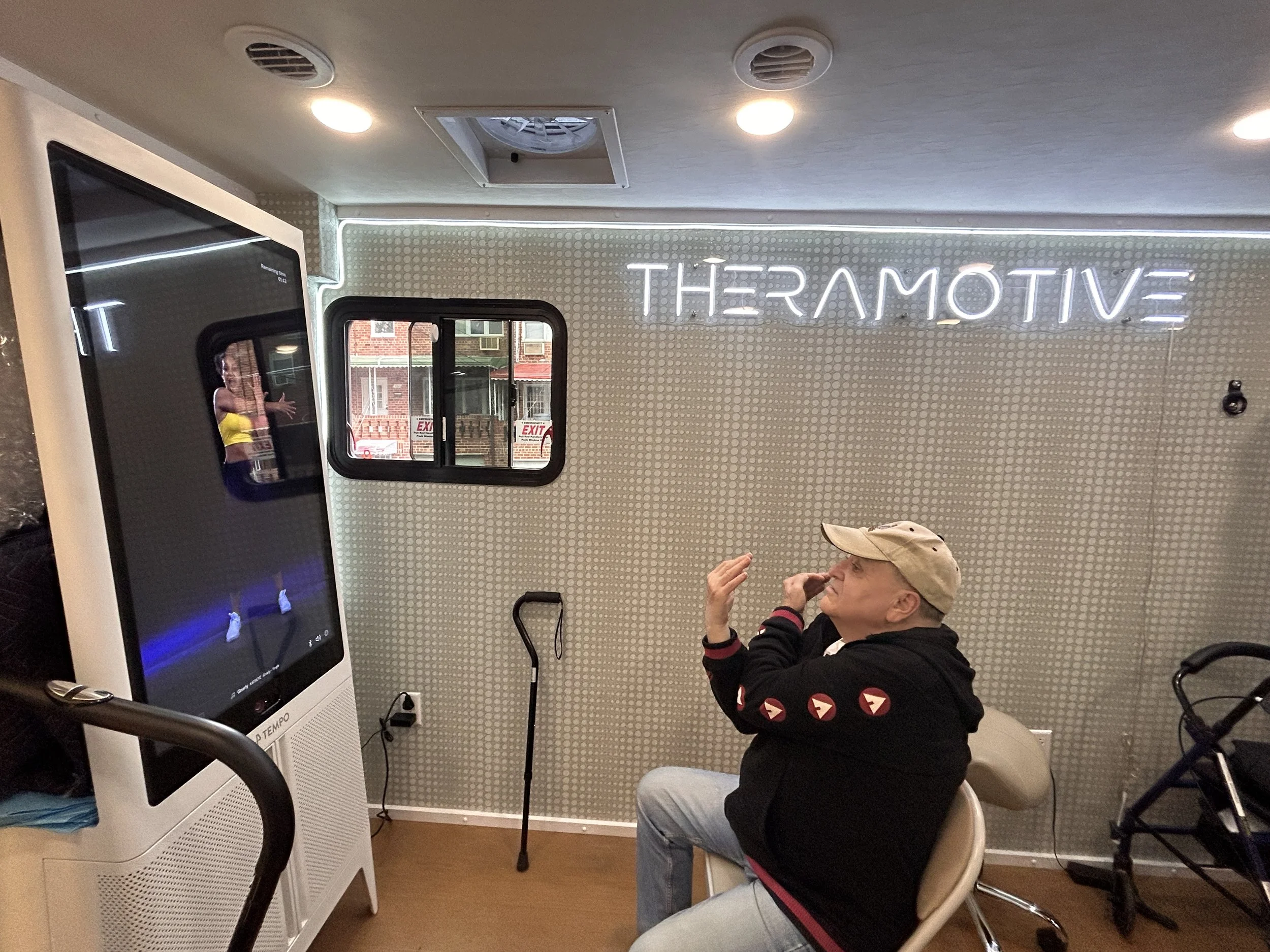
Here is the problem with traditional physical therapy: busy corporate employees don't have time for it. Leaving campus for an appointment means missing meetings, sitting in traffic, and falling behind on emails. So, they put it off until the pain requires expensive imaging or surgery. TheraMotive removes the hassle by bringing their mobile physical therapy clinics directly to your office building.
Our mobile physical therapy clinics are fully equipped, climate-controlled medical RVs with special ramps for wheelchair access. We park inside your parking spaces.
We can treat up to 30 workers per session. So we coordinate with your HR team to set up a seamless schedule. Employees can book 30-minute sessions during lunch, before work, or right after their meetings
We verify insurance, bill directly, and provide clear cost information upfront so your benefits team doesn't have to deal with the administrative headache.
We don't just treat injuries; we prevent them. We host sessions on desk ergonomics and assess individual workstations to fix chair heights before they cause joint damage.
We provide leadership team with reports showing program utilization, cost savings, and ROI data, proving the value of your wellness program.