
How Physical Therapy Reduces Knee Pain in Warehouse Workers
If you manage warehouse operations for Amazon, UPS, FedEx, DHL, or USPS, knee problems are probably something you see every single day. You see workers limping during the last two hours of their shift. You notice people struggling to squat down to the bottom racking. You watch employees who used to move at lightning speed across the floor suddenly slow down because their knees are completely worn out.
Knee problems slow your warehouse down significantly. Workers in pain move more slowly, avoid certain tasks, and take more unplanned breaks, and that’s a direct hit to your output. Workers’ compensation claims for knee injuries can run into tens of thousands of dollars per case, especially when surgery is involved. These injuries can sideline employees for weeks or even months. Over time, many experienced workers with chronic knee issues shift into desk or administrative roles, leaving you to repeatedly train new people on the floor.
Why Warehouse Work Causes Knee Pain
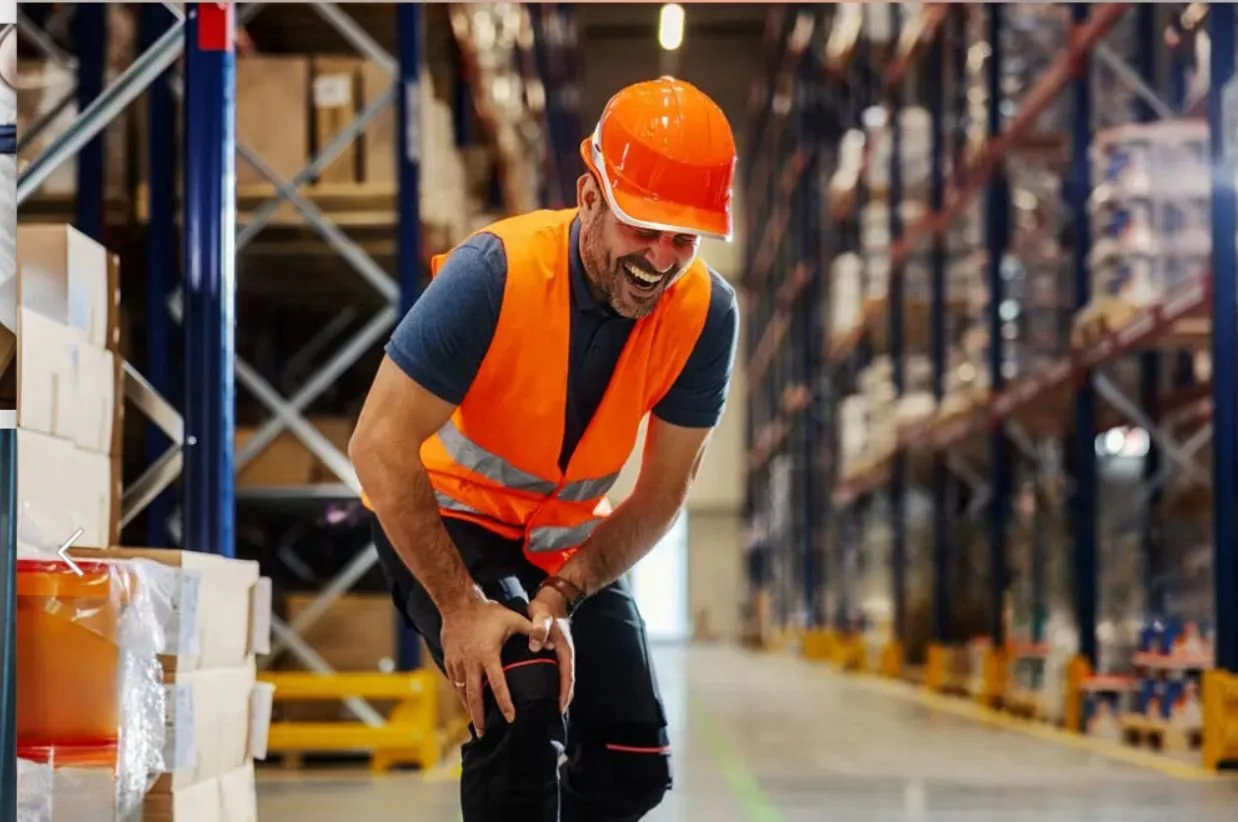
The human knee is essentially a hinge joint designed to act as a shock absorber. But the combination of hard floors, heavy loads, and repetitive squatting tears down the cartilage in the knee joint over time. Think about what your workers actually do all day:
Walking 10 to 15 miles a shift regularly on solid concrete floors with absolutely zero support sends persistent shockwaves directly up the lower legs and into the kneecaps.
Dropping into a deep squat to pick heavy inventory from the lowest shelves forces the knee joint to bear the entire weight of the load and the worker's body.
Twisting the body to place a box on a conveyor belt while the feet stay planted creates a severe shearing force that tears at the knee cartilage and ligaments.
Repeatedly climbing up and down the warehouse stairs while carrying bulky, off-balance items puts immense, repetitive pressure on the front of the knee.
What symptoms your warehouse workers may complain about:
Severe knee injuries rarely happen out of nowhere; they are usually the result of months of wear-and-tear. Watch your warehouse floor for these common warning signs:
A deep pain inside or just below the kneecap during or after a long shift.
Severe stiffness and popping sounds when standing up after a break.
Visibly relying on their arms to pull themselves up from a squat.
Trouble navigating stairs and ladders, taking them one slow step at a time.
Visible swelling or puffiness around the knee joint by the end of the day.
How Physical Therapy Treats Knee Pain in Warehouse Workers
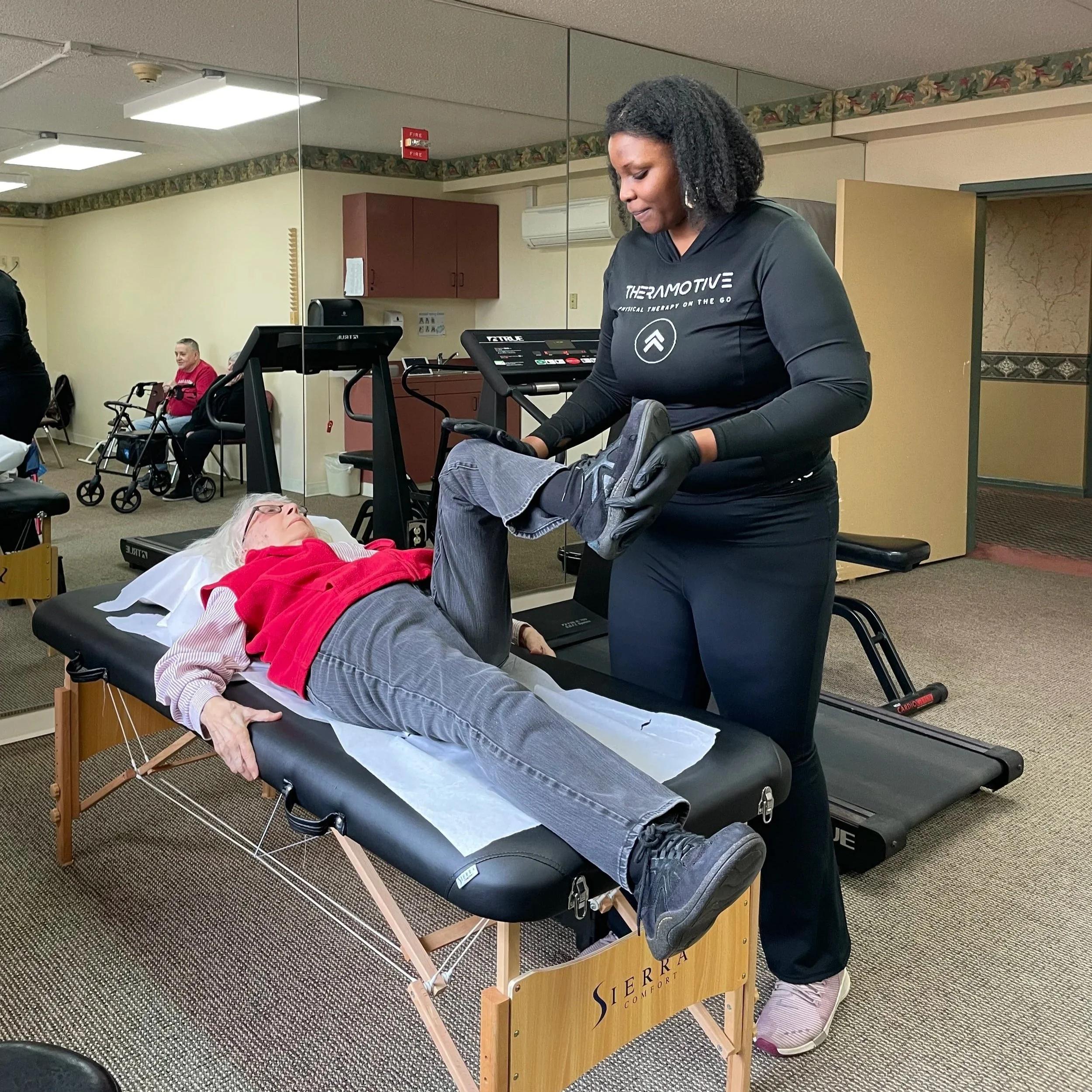
Telling a warehouse worker to put ice on their knees doesn't fix the fact that they have to walk another 10 miles tomorrow. They need physical therapy to rebuild their body's natural shock absorbers. Physical therapy helps warehouse workers by:
Strengthening the lower limb so the muscles absorb the impact of the concrete, rather than the knee joint itself.
A physical therapist watches how your team actually moves. We teach them how to depend on the hips and use their glutes so direct pressure is taken off the kneecap when picking from low shelves.
Stretching out incredibly tight leg muscles so workers can bend, reach, and climb without pulling on the knee joint.
How TheraMotive Brings Mobile Physical Therapy Clinics to Your Warehouse
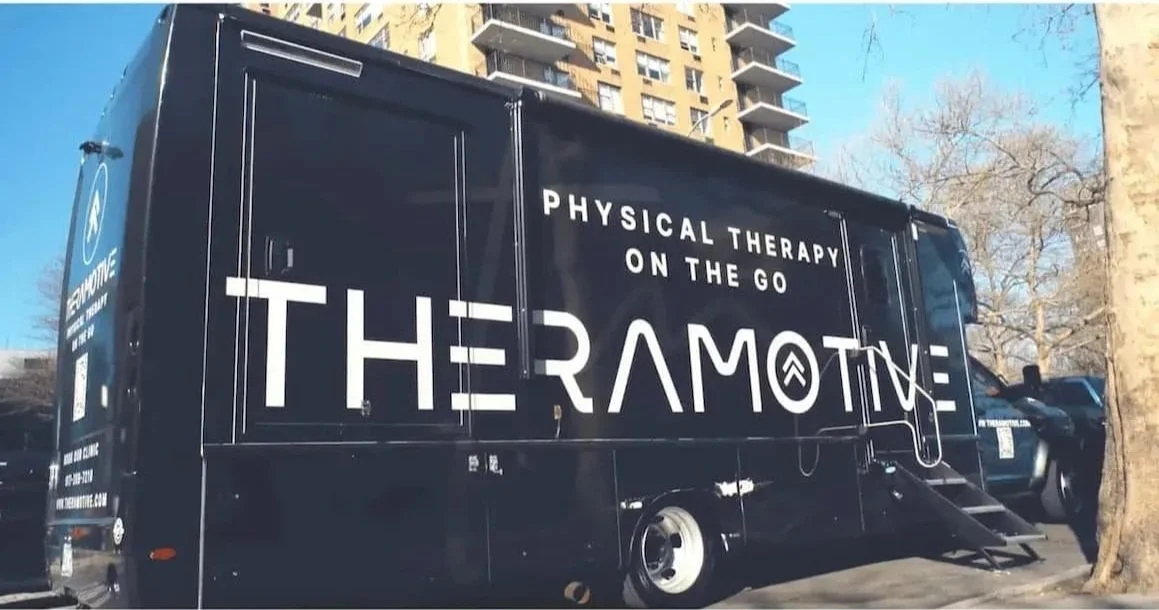
Here is the problem: warehouse workers can’t just leave in the middle of a shift to drive across the city for physical therapy. By the time the pain is bad enough to force them off the floor, a minor ache has turned into a torn knee cartilage. TheraMotive fixes this by bringing the mobile physical therapy clinics right to your facility.
Our mobile physical therapy clinics are fully equipped, climate-controlled medical RVs with wheelchair ramps and private treatment rooms. We park right in your lot.
With the capacity to see up to 30 people a day, workers can step outside for a quick 30-minute appointment during a shift change or break without ever leaving the facility.
We manage all the insurance billing, coordinate with your operations team, and handle the complex workers' comp documentation.
We use outcome data to help your safety team identify patterns. If an entire zone is experiencing knee pain, we help you figure out which specific task or racking setup is causing it.