
How Physical Therapy Reduces Low Back Pain for Production Line Workers
Stand in any manufacturing facility and watch your production line workers for an hour. You'll see the same movements repeated hundreds of times. Bending. Reaching. Twisting. Holding awkward positions. Each repetition is small, but over an 8 or 10-hour shift, these movements add up to serious lower back strain.
If low back pain is affecting your production line workforce, it's impacting your line speed, quality output, and injury costs. And unlike sudden accidents, repetitive strain injuries build gradually until they sideline your most experienced workers.
Why Production Line Work Destroys Lower Backs
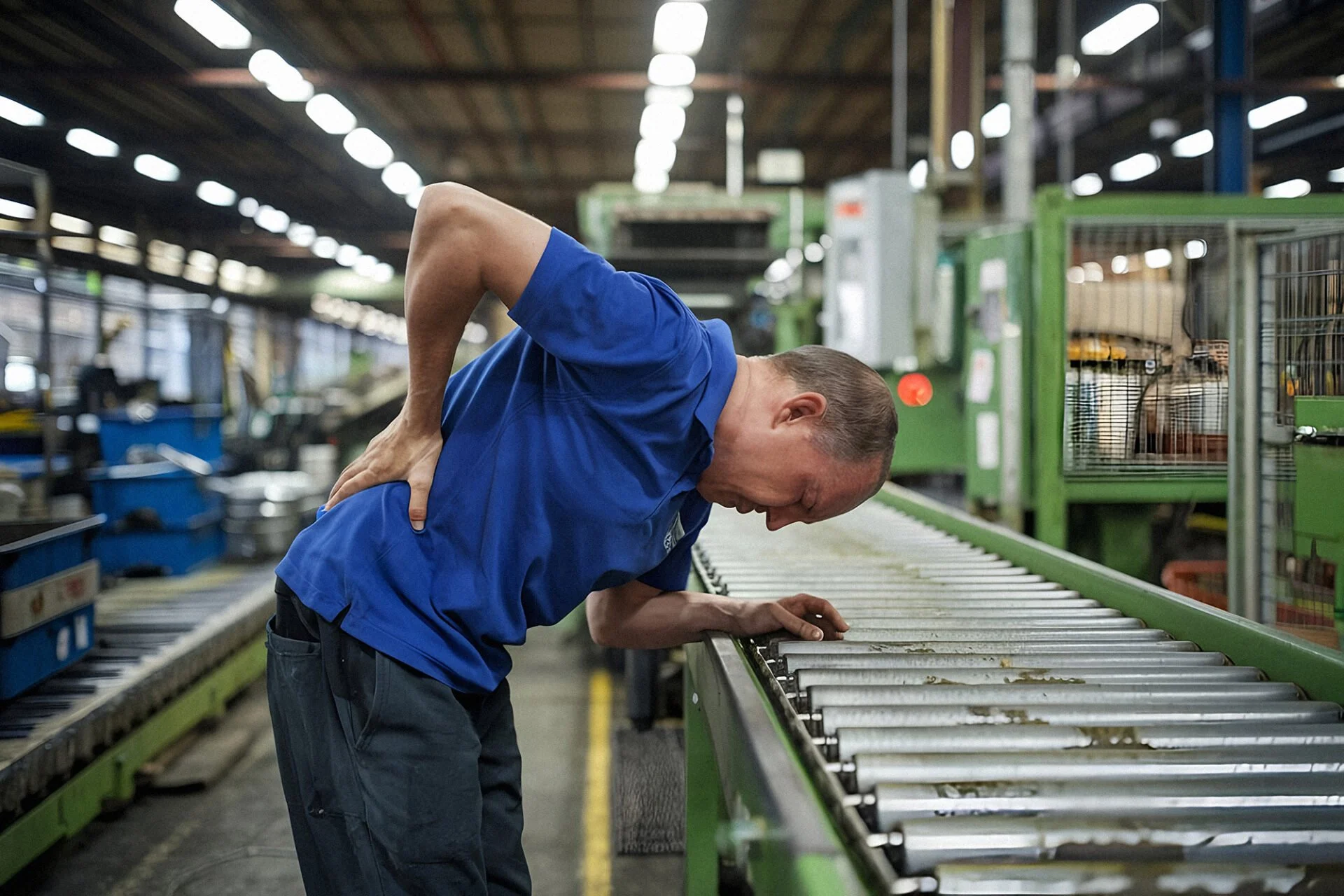
Production line environments create specific biomechanical challenges that traditional office or warehouse work doesn't.
Your workers stand in fixed positions for extended periods with no movement variation.
They're reaching repetitively to the same point on the line, creating one-sided strain patterns.
They're bending forward over conveyor belts or workstations for hours.
They're twisting at the waist repeatedly to grab parts or place finished products.
They're holding tools or parts in sustained awkward positions.
Their workstations may be set at heights that force them to hunch or overreach.
Specific symptoms your production line workers report:
One-sided back pain from repetitive reaching
Deep aching from prolonged standing in one spot
Sharp pain when twisting to access different areas of their station
Stiffness that makes position changes difficult
Fatigue that affects quality and speed in later hours
Why Physical Therapy Fixes Production Line Back Pain
Generic back exercises don't work for production line workers because they don't address the specific repetitive movements causing the problem.
Physical Therapy provides targeted, job-specific correction. A licensed Physical Therapist acts as both a clinician and an ergonomic consultant:
They analyze the actual movements your employees perform hundreds of times per shift and strengthen the specific muscles being overworked.
They correct and help with movement modifications that maintain productivity while reducing strain
They provide consultative feedback to your EHS team and recommend for workstation adjustments that prevent injury without slowing the line.
How TheraMotive Brings Mobile Physical Therapy Clinics to Your Production Floor
Here's the challenge with traditional PT for production workers: they work fixed shifts. They can't just leave for appointments. Missing production time affects your entire line output. And workers often delay seeking help until pain is severe because accessing care seems impossible.
TheraMotive partners with manufacturing operations to eliminate that barrier. Our fully equipped, climate-controlled mobile Physical Therapy clinics arrive on-site on a schedule that integrates with your production calendar. We work around shift changes and planned breaks. Workers can receive professional care without leaving the facility or disrupting line operations.
For your operation, this means preventing repetitive strain injuries before they happen, keeping experienced workers on the line instead of on disability, and maintaining consistent production output without injury-related disruptions.
How to Stop Repetitive Strain Before It Stops You
Production line back pain isn't random. It's the predictable result of repetitive movements without proper support. The longer your workers perform these movements without intervention, the more expensive the eventual injury becomes.
Early access to Physical Therapy that understands manufacturing prevents chronic injuries that cost far more in claims, lost productivity, and training replacements.