
How Physical Therapy Reduces Shoulder Pain for Construction Workers
If you manage construction crews for a major general contractor like Turner, AECOM Tishman or Hunter Roberts, you have seen it happen. Workers making faces when they have to work overhead. People asking to switch tasks because their shoulder is bothering them. Experienced workers who used to handle overhead work with no problem now avoiding those assignments.
Shoulder pain in construction isn't just uncomfortable. When someone's shoulder hurts, they can't safely work overhead, use power tools properly, or lift materials. That's both a productivity issue and a safety concern. Construction workers have high rates of shoulder problems because of all the overhead work and heavy lifting the job requires. All of these problems are not just a personal ache, it is a major safety hazard, and it slows down your entire project timeline.
Why Construction Work Causes Shoulder Pain
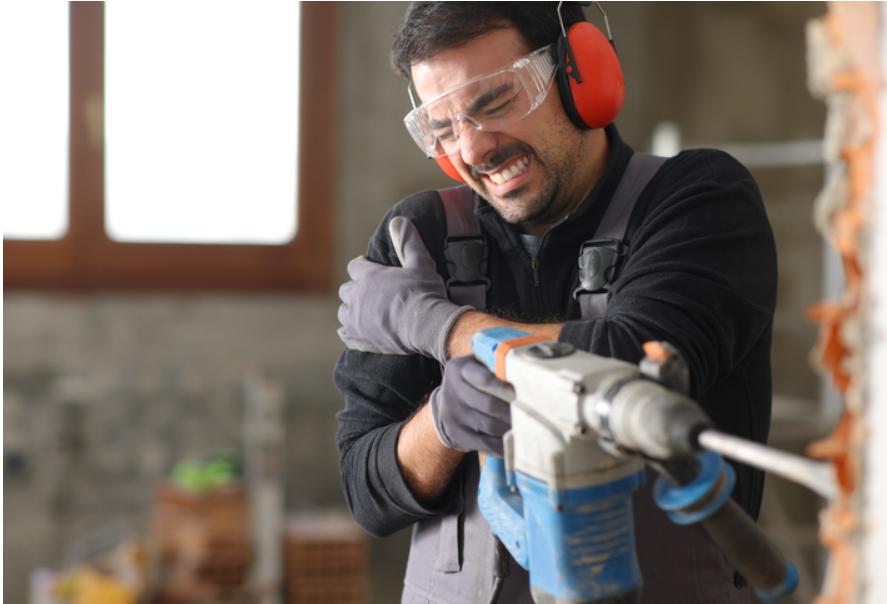
The human shoulder is built for flexibility and movement, not for supporting heavy loads at awkward angles for 10 hours a day. Construction work puts the shoulder joint through extreme, repetitive stress that office workers simply never experience:
Installing HVAC, electrical channel, or drop ceilings forces the shoulder to bear the heavy weight of the arms and tools in its weakest position for hours at a time.
Repeatedly lifting heavy materials from the dirt up to shoulder height grinds down the joint's cartilage.
Resting heavy stacks of drywall, lumber, or equipment directly on the shoulder joint crushes the soft tissues and tendons underneath.
Operating heavy hammer drills or impact drivers overhead sends violent, repetitive vibrations directly down the arms and into the shoulder socket.
What symptoms your construction workers may complain about:
Pain when working overhead or lifting above shoulder height
Aching during or after using power tools
Weakness when lifting or carrying materials
Stiffness that limits how high they can reach
Pain that shoots down the arm
Difficulty sleeping on the sore shoulder, which affects recovery
How Physical Therapy Treats Construction Work Shoulder Pain
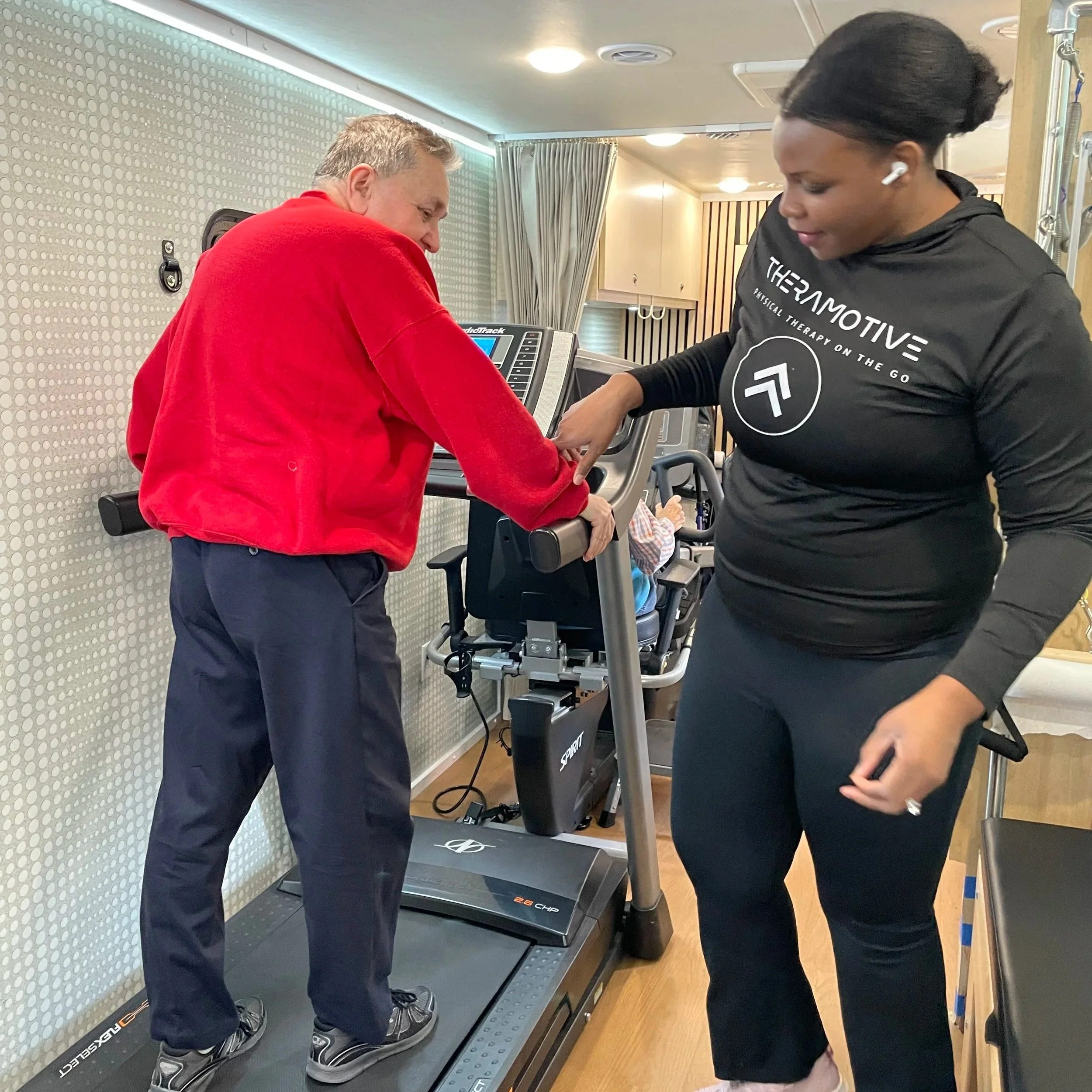
Making the shoulder joint strong enough to hold up heavy tools for an entire 10-hour shift without giving out.
Loosening up the stiff joints so they can comfortably reach overhead again.
Showing workers better ways to position their bodies and tools so their shoulder isn't taking the entire burden of the load.
A physical therapist who understands construction watches workers do their real tasks. How do they work overhead? What positions do they lift from? How do they use tools? Maybe workers are lifting wrong. Maybe their shoulder blade isn't moving right. Maybe they're compensating with their neck or back. Maybe the vibration from tools is causing more damage than expected.
How TheraMotive Brings Mobile Physical Therapy Clinics to the Construction Sites
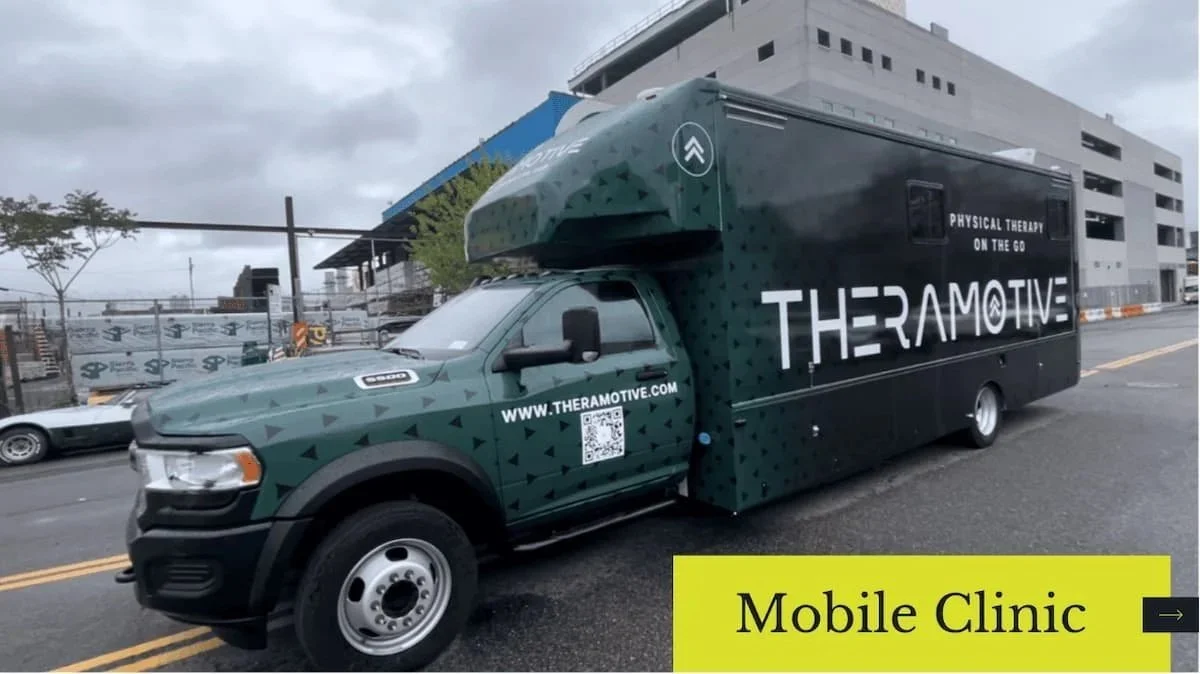
Here is the reality of construction: crews work long hours, and job sites change constantly. A worker isn't going to leave the site in the middle of a concrete pour to drive across town to a clinic. So, they push through the pain until they need a career-ending surgery. TheraMotive's mobile physical therapy clinics are built specifically to solve this logistical nightmare.
Our fully equipped, wheelchair-accessible, climate-controlled medical RVs park right at your active job site or main equipment yard.
We coordinate with your site supervisors to treat up to 30 workers per session, so workers can get a 30-minute treatment sessions during safety stand-downs, or lunch breaks without ever leaving the site.
Construction claims are complicated. We manage all the medical paperwork, coordinate with your insurance, and track exactly what restrictions a worker has.
We don't just guess if someone is better. Our licensed Physical Therapists tests if a worker is physically ready to go back to overhead framing or heavy lifting.
We create strength programs for overhead demands. We train better tool positioning and body mechanics.
We help prevent injuries through warm-up programs for construction work, talks on shoulder injury prevention, early intervention before people need time off, and identifying high-risk tasks needing modification.
For your jobs, this means keeping skilled workers instead of losing them to injuries, reducing workers' comp costs through early help, and ensuring safe return to overhead work without re-injury.
How to stop Shoulder Problems from Ending Construction Careers
Shoulder pain that gets ignored doesn't heal on its own. The ability to do overhead work doesn't just come back. Workers who push through often develop permanent problems requiring surgery or restrictions that mean they can't do the job.
About half of workers in physically demanding jobs will have shoulder pain. TheraMotive's construction-focused approach prevents temporary injuries from becoming career-ending problems.