
How Physical Therapy Reduces Hip Pain in Warehouse Workers
If you manage warehouse operations for Amazon, UPS, FedEx, DHL, or USPS, you've probably noticed workers limping by the end of their shifts. People moving stiffly when they first start work. Employees avoiding tasks that require a lot of walking or climbing stairs.
Hip pain in warehouse workers is common, and it's not just about being uncomfortable. When someone's hip hurts, they can't walk the miles your warehouse requires, climb ladders safely, or lift and carry loads properly.
Hip problems can reduce productivity because pain and limited mobility make workers move more slowly and avoid physically demanding tasks. Hip, thigh, and pelvis injuries can also be costly, with recent national workers’ compensation data showing average costs of about $66,634. These injuries often lead to missed work time and can create staffing strain when overtime, or temporary coverage is needed.
Why Warehouse Work Causes Hip Pain
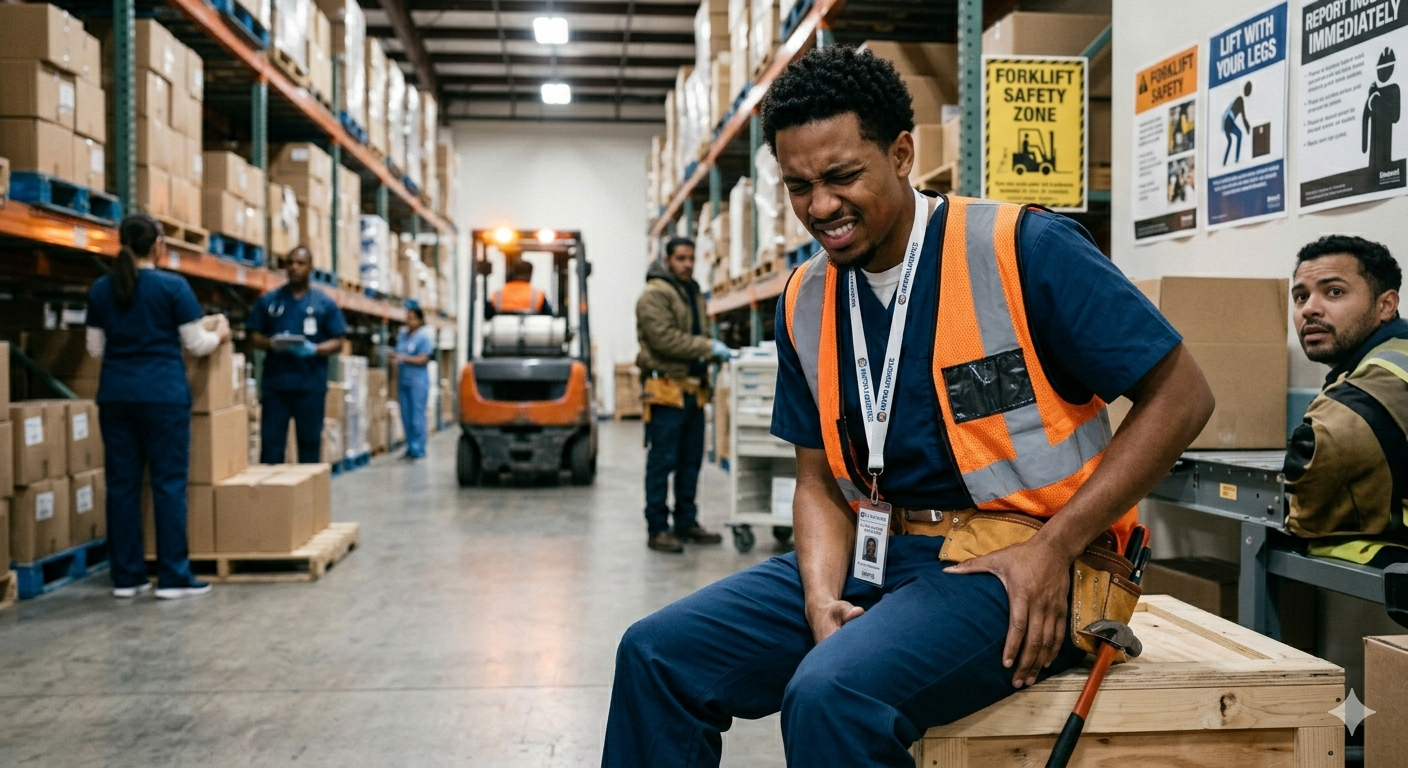
The human hip is a durable joint, but warehouse work puts it under excessive stress. Think about what your workers do all day:
Walking 10 to 15 miles a shift on hard concrete floors sends constant shockwaves directly up the legs and into the hip joints.
Twisting the body to place a heavy box on a conveyor belt while the feet stay planted grinds the cartilage inside the hip socket.
Squatting down to access low bins and driving back up with heavy inventory exhausts the glutes and hip muscles.
Repeatedly climbing up and down the stairs while carrying bulky items puts heavy load on the hips.
All that walking on concrete with no cushioning, combined with the lifting and climbing, wears down the hip joint over time.
What your warehouse workers mostly complain about:
Hip problems don't happen overnight; they are wear-and-tear injuries. Watch your floor for these common warning signs:
Aching in the hip or groin after walking all day
Stiffness when they start moving after breaks
Pain when climbing stairs or ladders
Trouble sleeping because they can't lie comfortably on their side.
Difficulty squatting down to lower shelves
Limping by the end of long shifts
How Physical Therapy Treats Warehouse Hip Pain
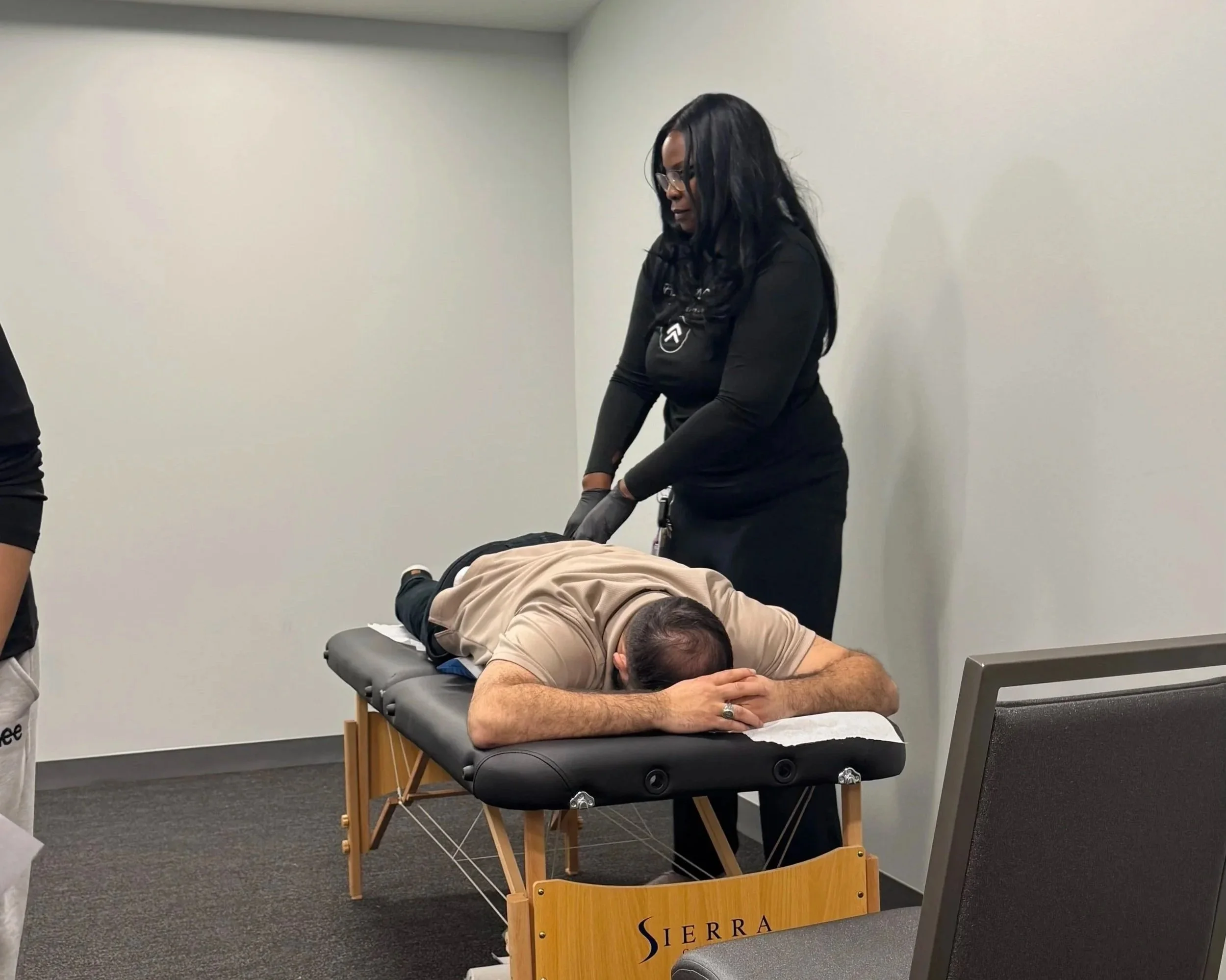
Telling a worker with a bad hip to take it easy doesn't work when their job requires heavy work. They need physical therapy to rebuild their foundation. Physical therapy helps warehouse workers by:
Strengthening the glutes and hip muscles so they can absorb the impact of walking on hard floors all day.
Stretching out incredibly tight hip muscles so workers can squat and bend safely without compensating with their lower back.
A physical therapist watches how your team actually walks. If a worker is limping and favoring one leg, we fix their stride before it causes a secondary injury to their knees or back.
How TheraMotive Brings Mobile Physical Therapy Clinic to Your Warehouse
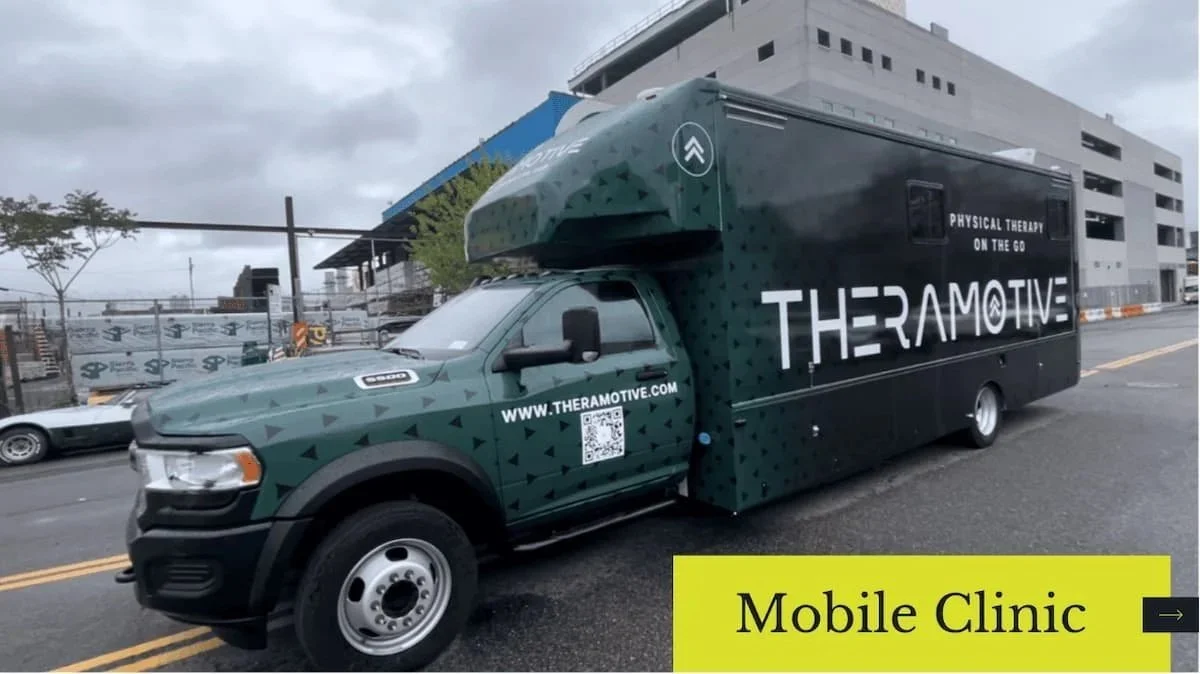
Here is the problem: warehouse workers can’t just leave in the middle of a shift to drive across town for physical therapy. By the time the pain is bad enough to force them off the floor, a minor ache has turned into a comp claim. TheraMotive fixes this by bringing the mobile clinics right to your loading dock.
Our mobile clinics are fully equipped, climate-controlled medical RVs with wheelchair ramps and private treatment rooms. We park right in your lot.
With the capacity to see up to 30 people a day, workers can step outside for a quick appointment during a shift change or break without ever leaving the facility.
We manage all the insurance billing and workers' comp documentation, coordinating directly with your HR and safety teams.
We use data to spot facility patterns. If our reports show an entire sorting department has hip pain, we help your safety team figure out what specific task is causing it.
For your warehouse, this means catching hip problems before they sideline workers, maintaining full crew capacity, and reducing injury costs through early intervention.