
How Physical Therapy Reduces Hip Pain in Healthcare Workers
If you manage nurses, physicians, CNAs, or other clinical staff at Mount Sinai, Northwell, Langone or any other hospitals or health facilities, hip pain is a complaint you hear almost daily. You see it on the floor: nurses limping by hour ten of a 12-hour shift. Caregivers moving stiffly as they walk between patient rooms. Employees frowning during the constant moving and turning required for bedside care.
Hip problems are strongly linked to productivity loss, and work limitations, making it harder for staff to keep up with patient care. Workers’ compensation claims often cost tens of thousands of dollars on average, with total costs commonly around $60,000+ per case. These injuries can lead to significant time away from work, forcing already short-staffed units to work overtime. That strain can also worsen staff to patient ratios. When injuries and burnout drive nurses to leave, hospitals face steep turnover costs, with replacing a RN typically costing around $40,000–$60,000 in recruitment, onboarding, and lost productivity.
Why Healthcare Work Causes Hip Pain
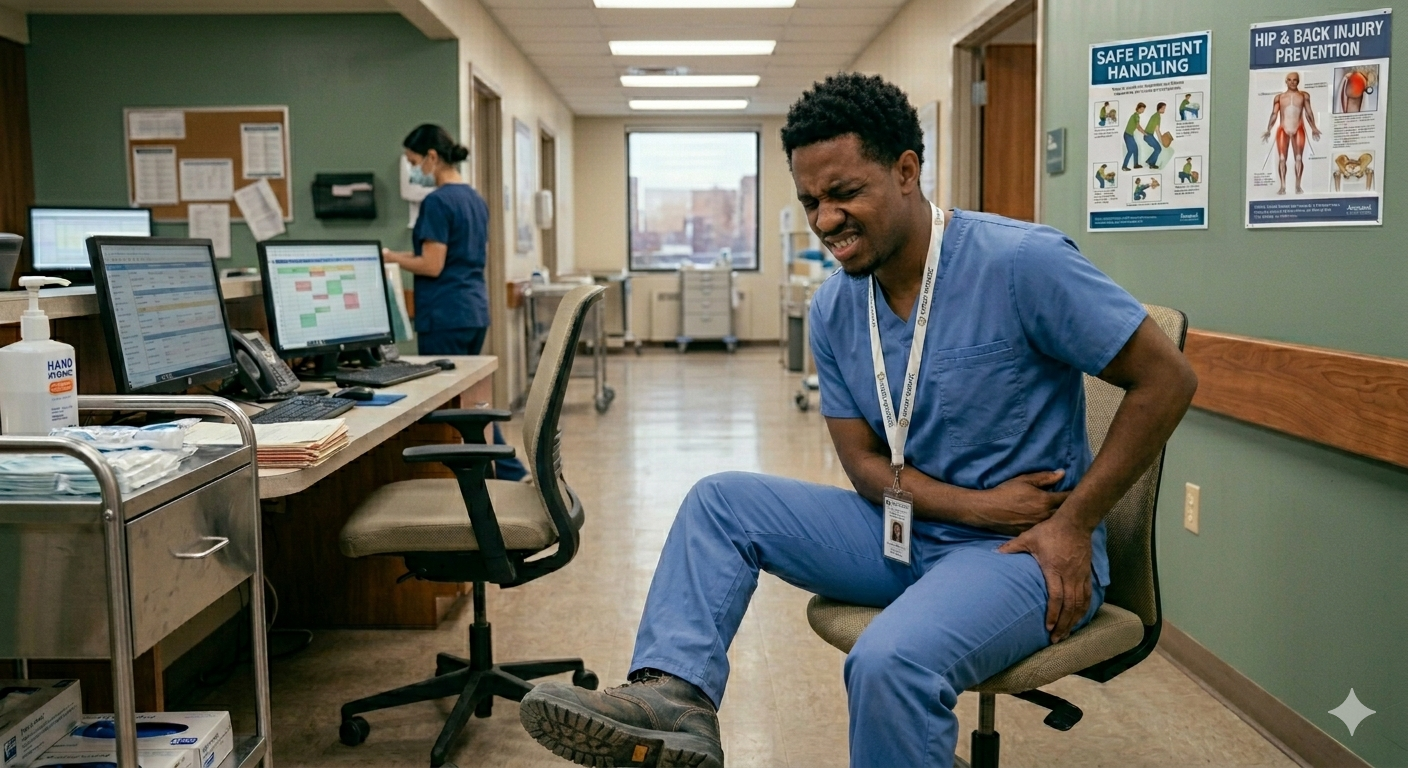
Healthcare work combines the physical toll of a marathon with the heavy lifting of a warehouse worker, often with zero time to sit down and recover. Think about what your staff physically endures during a 12-hour shift:
Constantly twisting and turning in tight spaces to adjust monitors, grab supplies, or provide care puts severe rotational grinding on the hip joint.
Lifting or moving patients requires the hips to act as the primary anchor. Doing this dozens of times a shift exhausts the glutes and hip muscles.
Walking miles up and down hospital corridors without adequate rest compresses the cartilage in the hip joint.
Reacting instantly to catch a falling patient or dealing with a sudden shift in human weight forces the hip to absorb violent loads without warning.
What symptoms your healthcare workers may complain about:
Healthcare workers are tough and will prioritize patient care over their own pain. Watch your units for these common warning signs:
A deep pain in the hips during or immediately after a long shift.
Severe stiffness when transitioning from sitting at their stations back to standing.
Pain when moving during patient care
Difficulty with patient transfers
One side of the hip hurting more from straining it
Noticeably limping on one leg by the end of a shift.
Exhaustion because hip discomfort prevents them from sleeping and recovering on their days off.
How Physical Therapy Treats Hip Pain in Healthcare Workers
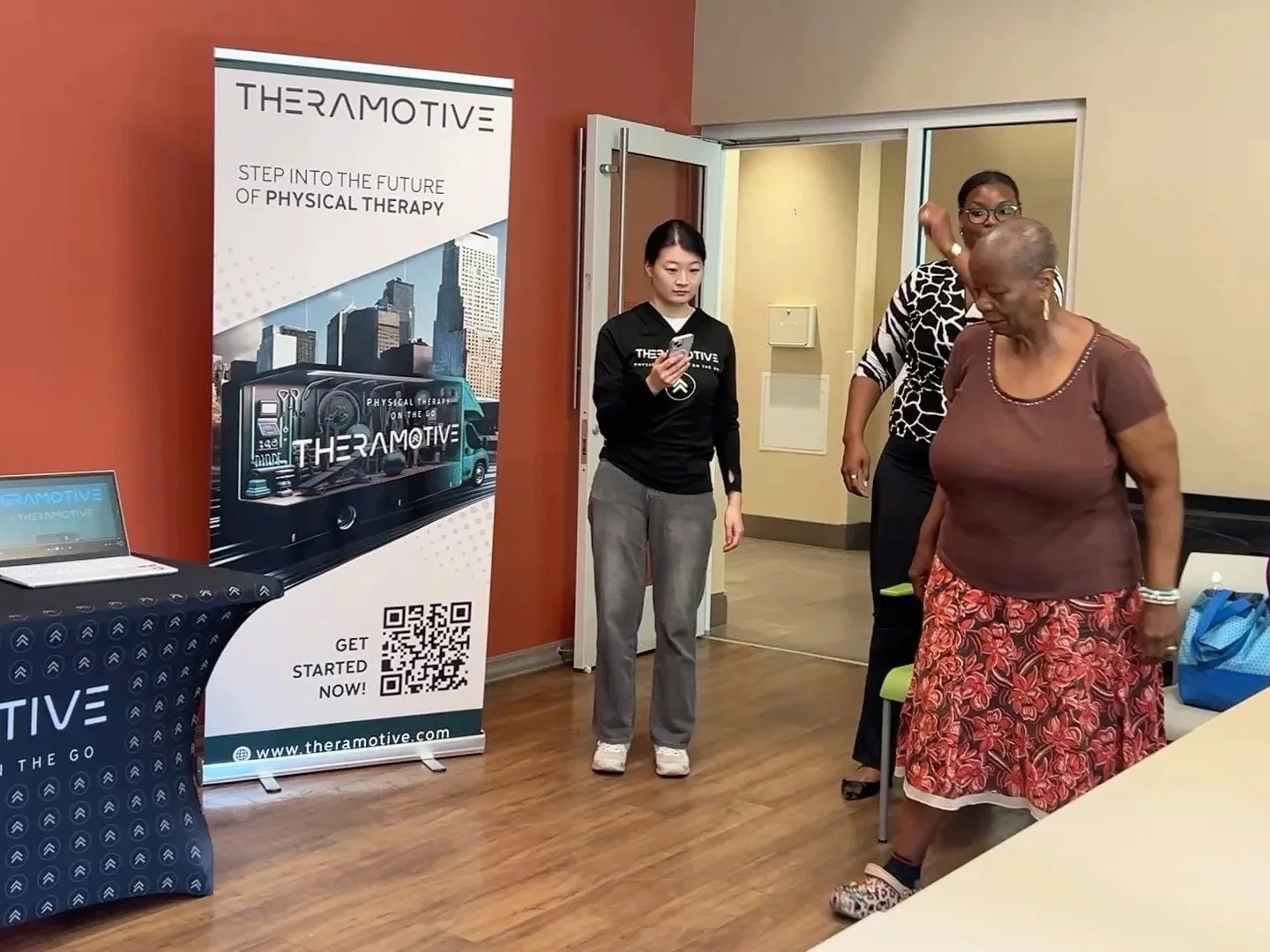
Telling a nurse to take it easy is impossible when the call lights are blinking. They need physical therapy that prepares them for the harsh realities of the hospital ward. Physical therapy helps your clinical staff by:
Strengthening the hip muscles and glutes so the joint can handle the extreme demands of safe patient handling.
Loosening the tight muscles caused by 12 hours of constant standing and moving.
A physical therapist watches how your staff actually works. If a CNA is using their back and hips incorrectly to lift a patient, we train them to use proper body mechanics to protect their joints.
How TheraMotive Brings Mobile Physical Therapy Clinics to Healthcare Facilities
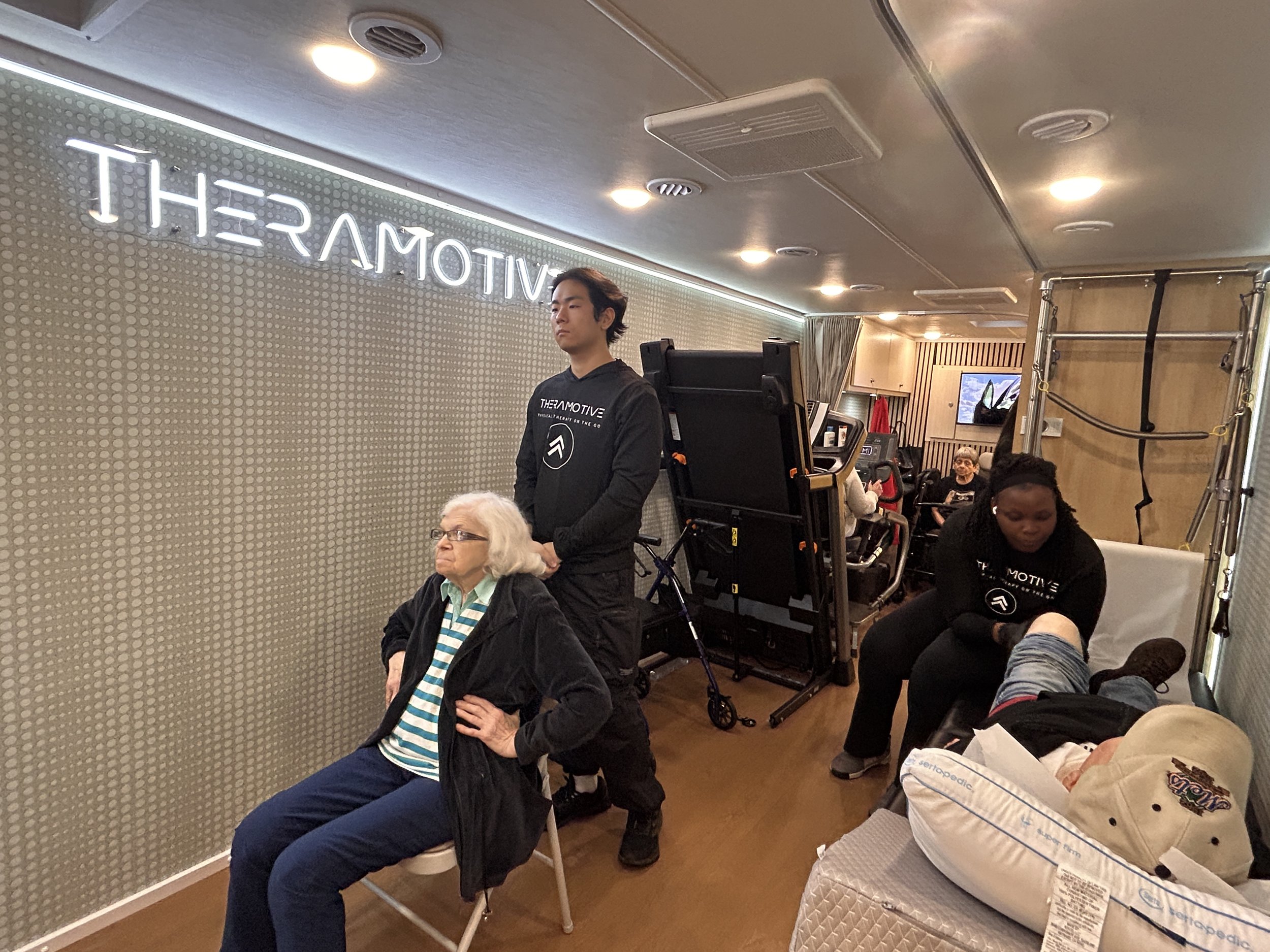
Here is the sad irony of healthcare: your staff spends their entire career taking care of other people, but their 12-hour, rotating shifts make it nearly impossible to get to a doctor for themselves. TheraMotive eliminates this barrier by bringing mobile physical therapy clinics directly to your facility.
Our mobile physical therapy clinics are fully equipped, climate-controlled medical RVs. We park right inside your parking lot.
Our mobile clinics have private HIPAA-compliant treatment rooms with wheelchair accessibility.
We understand 12-hour shifts, and rotations. We offer appointments before, during, and after shift changes so your floor stays covered and workers don't have to commute on their days off.
We coordinate with your administration and can treat up to 30 people per session
Your staff is burnt out enough. We verify their insurance, bill directly, and simplify workers' comp claims.
We provide your administration with clean reports showing which units are experiencing the most pain, helping you fix environmental or equipment issues before they cause widespread injuries.
How to Prevent Hip Pain from Reducing Productivity in Healthcare Workers
Your nurses and clinical staff give everything they have to your patients. They shouldn't have to sacrifice their own mobility to do their jobs.
In today’s incredibly tight labor market, offering accessible, on-site physical therapy isn't just a nice wellness scheme, it is a powerful retention tool. By bringing TheraMotive’s mobile physical therapy clinics to your facility, you catch these pains early, reduce burnout, keep your units fully staffed.